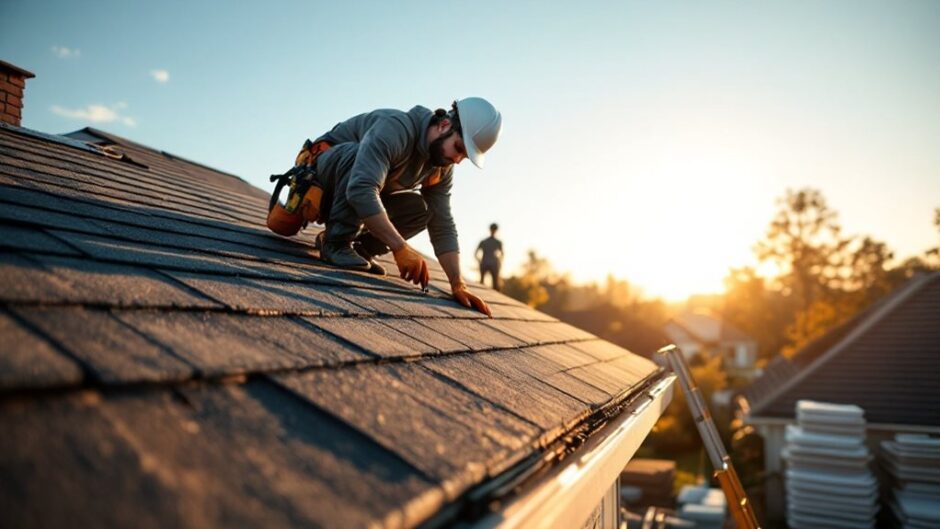
Finding the right roofing contractor involves systematic research through local recommendations, professional networks, and community forums. Homeowners should verify state licensing requirements, request proof of liability insurance coverage, and thoroughly examine past work portfolios and customer reviews. Key steps include obtaining multiple detailed written estimates, understanding warranty terms, and checking credentials with organizations like the NRCA. Following a comprehensive vetting process helps safeguard quality workmanship and shields this vital home investment.
Expert Highlights
- Ask neighbors, local hardware stores, and real estate professionals for trusted recommendations of roofing contractors they’ve worked with.
- Verify the contractor’s state licensing status, insurance coverage, and professional certifications before considering their services.
- Request and verify proof of liability insurance and workers’ compensation to protect yourself from potential accidents or damages.
- Review the contractor’s portfolio of completed projects and inspect previous work sites to evaluate their craftsmanship.
- Check multiple review sources and customer testimonials to identify patterns in service quality and professionalism.
Research and Gather Local Recommendations
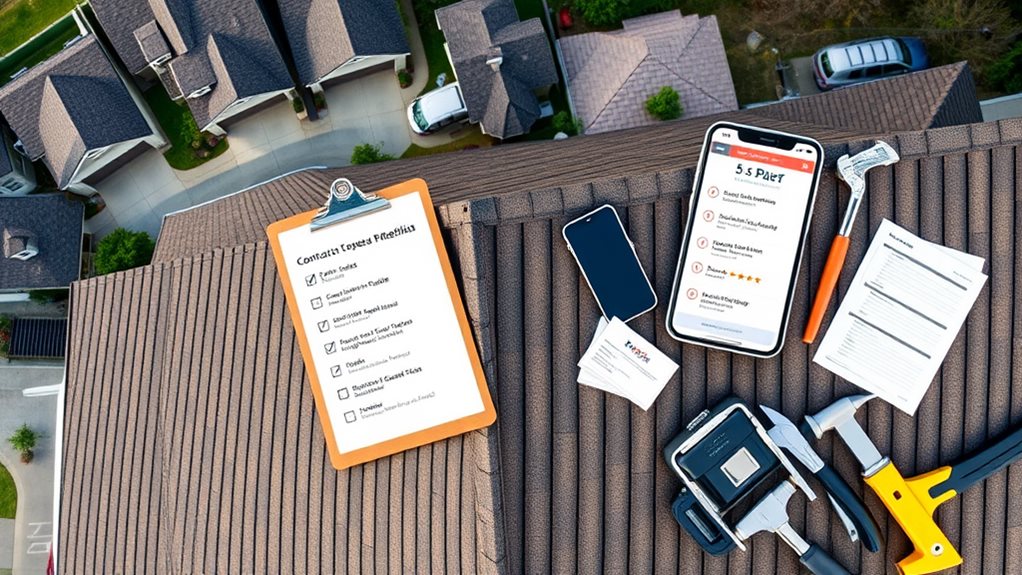
The first essential step in finding a reliable roofing contractor begins with thorough research and gathering recommendations from trusted local sources. Homeowners should start by consulting neighbors who have recently completed roofing projects, as these firsthand experiences often reveal valuable insights about contractors’ workmanship, reliability, and professionalism.
Local hardware stores, building supply companies, and real estate professionals can provide meaningful referrals based on their extensive industry connections. Additionally, community forums, neighborhood social media groups, and local business networks often contain detailed discussions about roofing experiences. While online review platforms offer convenient access to contractor ratings, residents should prioritize recommendations from within their community, as these sources better understand local building codes, weather challenges, and regional material preferences. This localized approach helps confirm the selected contractor has proven experience handling similar projects in the area.
Verify Licensing, Insurance, and Credentials
Before hiring a roofing contractor, homeowners must carefully verify the company’s licensing status according to their state’s specific requirements, as regulations can vary markedly between jurisdictions.
A legitimate roofing contractor should readily provide proof of extensive liability insurance and workers’ compensation coverage, which protects both the homeowner and workers in case of accidents or property damage during the project. Professional certifications from organizations like the National Roofing Contractors Association (NRCA) or manufacturer-specific credentials can further demonstrate a contractor’s commitment to industry standards and ongoing education.
Check State License Requirements
Verifying a roofing contractor’s state license requirements serves as an essential first line of defense against potential scams and subpar workmanship. Each state maintains different licensing regulations, with some requiring specific examinations, bonds, and insurance coverage before contractors can legally operate. Homeowners should contact their state’s licensing board or department of consumer affairs to comprehend local requirements.
Most states provide online databases where residents can confirm a contractor’s license status, disciplinary history, and compliance records. When checking credentials, homeowners should note the license classification, as some states offer different tiers for residential versus commercial work. Additionally, municipalities may require separate permits or registrations beyond state requirements. Taking time to verify these credentials helps guarantee the chosen contractor meets all legal obligations and maintains the necessary qualifications to perform quality roofing work.
Proof of Liability Coverage
Professional roofing contractors must carry extensive liability insurance and workers’ compensation coverage to protect both themselves and their clients from potential accidents, injuries, or property damage during roof installations and repairs. Homeowners should request current certificates of insurance and verify coverage directly with the insurance providers before signing any contracts.
| Insurance Type | What to Verify |
|---|---|
| General Liability | Coverage amount (minimum $1M) |
| Workers’ Compensation | Current policy status |
| Commercial Auto | Vehicle coverage limits |
| Umbrella Policy | Additional protection limits |
A legitimate contractor will readily provide these documents and maintain coverage throughout the project duration. Insurance verification helps protect homeowners from potential lawsuits and financial responsibility if accidents occur on their property during the roofing work.
Ask About Industry Certifications
Along with proper insurance coverage, industry certifications serve as key indicators of a roofing contractor’s expertise and commitment to quality workmanship. Reputable contractors typically hold certifications from organizations like the National Roofing Contractors Association (NRCA) or manufacturer-specific credentials from companies such as GAF, CertainTeed, or Owens Corning. These certifications require contractors to demonstrate technical proficiency, maintain safety standards, and stay current with industry best practices through ongoing education.
When evaluating certifications, homeowners should verify their authenticity and expiration dates. Quality contractors will proudly display their credentials and explain the rigorous requirements behind each certification. This transparency helps distinguish professional roofers from less qualified operators, ensuring customers receive high-quality installation and repair services that meet established industry standards.
Evaluate Past Work and Customer Reviews
One of the most reliable ways to gauge a roofing contractor’s capabilities is through careful examination of their previous projects and customer feedback. Homeowners should request a portfolio of completed jobs, particularly those similar to their own roofing needs, and ask for addresses of recent projects they can drive by to inspect.
Additionally, consulting multiple review sources, including Google Reviews, Angie’s List, and the Better Business Bureau, provides valuable insights into the contractor’s reputation and work quality.
While evaluating reviews, look for patterns in both positive and negative feedback, paying special attention to how the contractor handles challenging situations or customer complaints. Photos of completed projects, detailed testimonials, and specific mentions of the crew’s professionalism and cleanup practices often indicate a contractor’s commitment to quality workmanship and customer satisfaction.
Request and Compare Detailed Written Estimates

When seeking estimates from roofing contractors, homeowners should obtain at least three detailed written quotes that break down material costs, labor charges, and other essential line items.
A thorough comparison of these estimates reveals important differences in scope, quality of materials, and project timelines that might not be apparent from the total price alone. While cost is a significant factor, the cheapest bid isn’t always the best choice, as higher-quality materials and more experienced contractors may justify a higher price tag through superior workmanship and longer-lasting results.
Compare Line Item Costs
Getting multiple detailed written estimates from roofing contractors represents an essential step in comparing true project costs and preventing unwelcome surprises. Homeowners should carefully examine each line item within these estimates, looking for specific breakdowns of materials, labor, disposal fees, and potential additional charges.
Common line items include roofing shingles per square foot, underlayment costs, flashing materials, ventilation components, and removal of existing materials.
When comparing estimates, one should note any significant cost variations between contractors for the same line items, as these differences often reveal important insights about material quality or service extensiveness. If one contractor’s estimate seems unusually low or high for certain items, homeowners should request clarification about the specific products or services included, ensuring they’re making accurate comparisons between equivalent offerings.
Get Multiple Quotes First
Responsible homeowners should obtain at least three detailed written estimates before selecting a roofing contractor, as this practice helps confirm fair pricing and inclusive service coverage. Each estimate should clearly outline material costs, labor charges, timeline expectations, and warranty details, allowing for accurate comparisons between competing bids.
When gathering quotes, homeowners need to verify contractors are bidding on identical project specifications to make meaningful comparisons. This includes the same roofing materials, removal of existing layers, necessary repairs, and ventilation requirements. By documenting these details in writing, homeowners protect themselves from potential miscommunication and unexpected costs later.
Many reputable contractors offer free estimates, making it financially practical to gather multiple bids while demonstrating their commitment to transparency and professional service standards.
Look Beyond Price Differences
The lowest bid does not always represent the best value when selecting a roofing contractor. Homeowners should carefully analyze written estimates to understand exactly what each contractor proposes, as significant price variations often reflect differences in materials, labor, and project scope. A thorough comparison of detailed estimates helps identify potential gaps or oversights in coverage.
Review material specifications, including shingle grade, underlayment quality, and flashing details, guaranteeing all components meet local building codes and manufacturer warranties. Compare labor costs and crew size estimates, which affect both project timeline and installation quality. Examine warranty terms closely, noting differences in coverage length, exclusions, and whether both materials and workmanship are protected.
An estimate that thoroughly documents these elements demonstrates professional attention to detail and helps secure successful project completion with minimal surprises.
Understanding Contract Terms and Warranties

Professional roofing contracts contain multiple critical terms and warranty provisions that homeowners must thoroughly understand before signing. Carefully reviewing these documents helps protect both parties and guarantees clear expectations throughout the project’s duration. Most reputable contractors offer comprehensive contracts that outline specific details about materials, labor, and coverage periods.
| Contract Element | What to Look For |
|---|---|
| Material Warranty | 20-30 year manufacturer coverage |
| Labor Warranty | 5-10 year workmanship guarantee |
| Payment Terms | Clear milestone-based schedule |
| Cancellation Rights | Written procedures and timeframes |
When evaluating warranties, homeowners should distinguish between manufacturer warranties covering materials and contractor warranties protecting against installation defects. It is crucial to validate that all promises are documented in writing, including specific maintenance requirements that could affect warranty validity and coverage limitations that might apply under certain circumstances.
Red Flags to Watch Out For When Hiring
Selecting a roofing contractor requires careful attention to warning signs that could indicate potential problems or fraudulent practices. Homeowners who recognize these red flags early can protect themselves from costly mistakes and unreliable work, ensuring their roofing investment remains secure.
Door-to-door salespeople who pressure homeowners into immediate decisions, especially after storms, often represent companies that perform substandard work or disappear after receiving payment.
Beware of storm-chasing contractors pushing for quick decisions at your doorstep—they may vanish along with your money.
Contractors who demand full payment upfront or cash-only transactions may be attempting to avoid proper business documentation, potentially leaving clients without recourse if issues arise.
Companies lacking verifiable physical addresses, proper insurance documentation, or local references might be operating illegally or without necessary qualifications to complete roofing work properly.
These warning signs help community members make informed decisions when selecting trustworthy roofing professionals.
Frequently Asked Questions
How Long Will It Take to Complete My Roof Installation?
The average roof installation takes 1-3 days for most homes, depending on weather conditions, roof size, material choices, crew size, and complexity of the project’s design requirements.
Can Roofing Work Be Done During Winter Months?
Roofing work can be done in winter, though contractors prefer temperatures above 40°F. Snow and ice create safety concerns, while cold temperatures may affect shingle adhesion and material flexibility.
Should I Be Home During the Roofing Installation?
Homeowners aren’t required to be present during roof installation, but many prefer staying home to address unexpected issues and monitor progress. The contractor’s project manager handles on-site supervision.
What Happens if It Rains During My Roof Replacement?
Professional roofers monitor weather forecasts and use protective tarps during installation. If unexpected rain occurs, they’ll quickly cover exposed areas and resume work once conditions improve to protect the home.
How Much Deposit Should I Expect to Pay Upfront?
Most reputable roofing contractors typically request a deposit of 10-30% of the total project cost, with homeowners often finding that 20% is the standard industry expectation.
Expert Final Thoughts
Finding a reliable roofing contractor requires careful research, verification, and due diligence. By following a systematic approach of gathering recommendations, checking credentials, evaluating past work, comparing estimates, and understanding contracts, homeowners can considerably lessen their risk of hiring an unqualified contractor. Staying alert to common red flags while maintaining thorough documentation throughout the selection process helps guarantee a successful roofing project that protects one of life’s most valuable investments.