Professional tree removal services employ certified arborists who utilize specialized equipment and proven safety protocols to extract compromised or hazardous trees. Licensed specialists assess structural integrity, disease presence, and potential risks before implementing precise removal procedures that protect property and comply with local regulations. Their expertise encompasses thorough insurance coverage, proper waste disposal, and site cleanup. Understanding the nuanced indicators of tree distress enables property owners to make informed decisions about necessary removals.
Expert Highlights
- Licensed tree removal services provide comprehensive insurance coverage and trained professionals to safely remove hazardous or unwanted trees.
- Professional arborists assess tree health, structural integrity, and potential risks before determining the best removal approach.
- Specialists use advanced equipment including climbing gear, chainsaws, and wood chippers while following strict safety protocols.
- Complete services include branch removal, trunk cutting, stump grinding, debris cleanup, and proper disposal of waste materials.
- Tree removal companies ensure compliance with local regulations and obtain necessary permits before beginning any work.
Signs You Need Professional Tree Removal
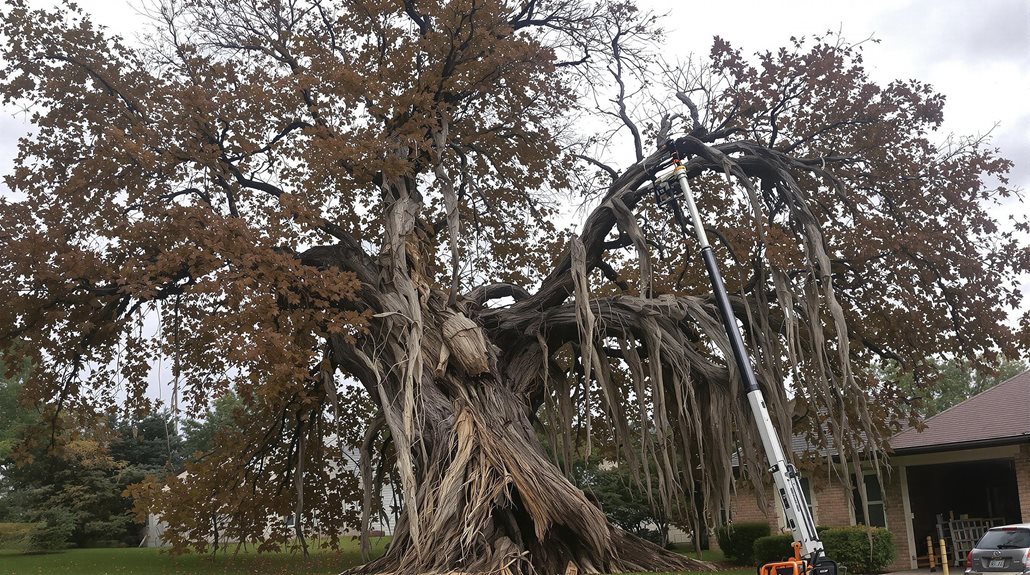
Several unmistakable indicators suggest the necessity of professional tree removal services, particularly when trees begin exhibiting signs of severe structural compromise or disease. Observable symptoms include significant trunk decay, extensive deadwood throughout the canopy, and the presence of large cavities or fungal growth at the tree’s base.
Critical warning signs that necessitate immediate professional intervention include visible root damage, a pronounced lean that has developed recently, and branches that interfere with power lines or structures.
Trees that display multiple split trunks, especially with visible cracks or seeping fluid, represent serious safety hazards that require expert assessment. Additionally, specimens affected by aggressive diseases, such as Dutch elm disease or oak wilt, often require removal to prevent pathogen spread to nearby healthy trees.
Benefits of Hiring Licensed Tree Specialists
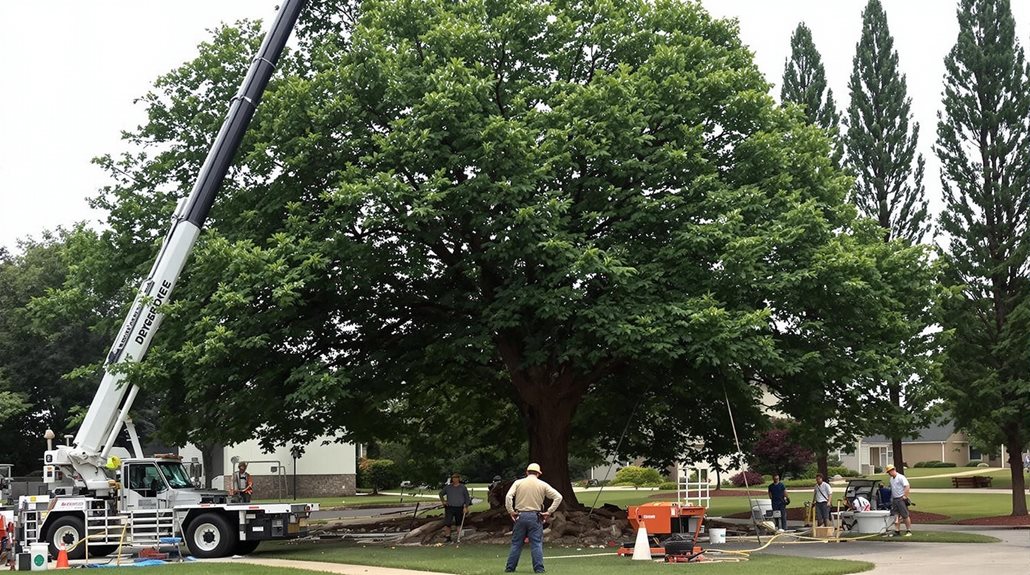
While tree removal may initially appear to be a straightforward task, engaging licensed tree specialists offers numerous critical advantages that extend far beyond basic cutting services.
Professional arborists possess extensive knowledge of tree biology, diseases, and proper removal techniques that guarantee safe and efficient operations.
- Licensed specialists maintain inclusive insurance coverage, protecting property owners from liability for accidents or damage during removal procedures.
- Certified arborists utilize specialized equipment and advanced techniques to prevent damage to surrounding structures and vegetation.
- Professional services include thorough site cleanup, waste removal, and proper disposal of organic materials.
- Trained specialists can identify potential complications, such as underground utilities or structural concerns, before commencing work.
These qualifications enable licensed professionals to execute complex removals while adhering to local regulations and industry safety standards.
Essential Equipment and Safety Protocols
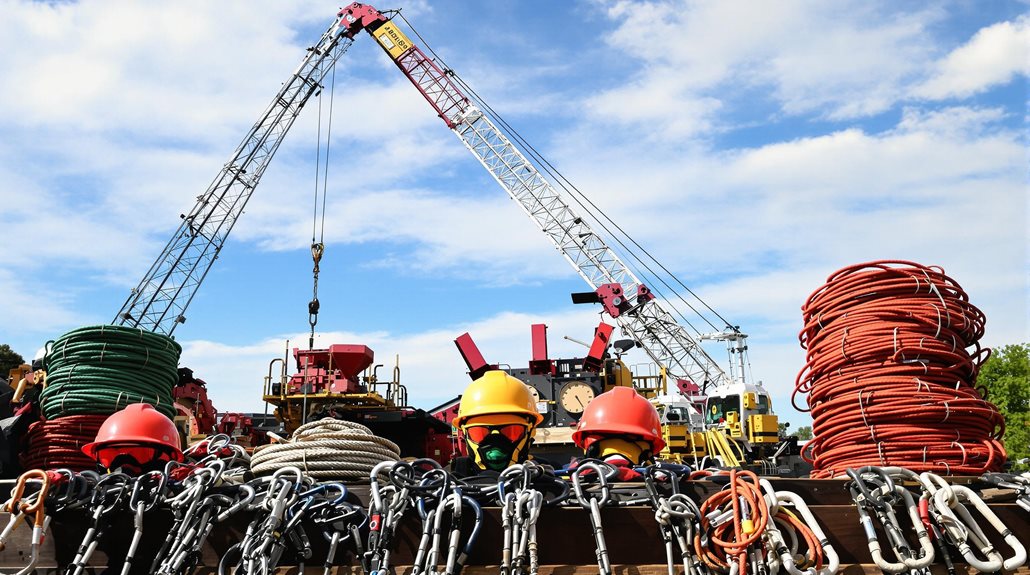
Professional tree removal operations require extensive safety equipment and standardized protocols to minimize risks during complex procedures. Arborists must utilize properly maintained climbing gear, rigging equipment, and power tools while adhering to OSHA regulations and industry best practices.
| Equipment Type | Safety Protocol |
|---|---|
| Climbing Harness | Daily inspection for wear |
| Chainsaw | Maintain chain brake, use with PPE |
| Rigging Ropes | Test load capacity before use |
| Wood Chipper | Clear work zone, emergency shutoff |
| Fall Protection | Secure anchor points, backup system |
The implementation of systematic safety measures encompasses thorough site assessment, equipment verification, and personnel positioning protocols. Each procedure requires methodical execution, incorporating essential communication systems between ground crews and elevated workers, while maintaining strict adherence to established emergency response procedures.
Frequently Asked Questions
How Long Does It Typically Take to Remove a Large Tree?
Removing a large tree typically takes 4-8 hours, depending on factors like location, accessibility, tree size, species, and whether stump removal is included in the process.
Will Tree Removal Affect My Property’s Value?
Property value can be impacted either positively or negatively by tree removal, depending on the tree’s condition, location, and overall landscape aesthetics. Professional assessment helps determine potential effects.
What Happens to the Tree Stump After Removal?
After tree removal, stumps can be ground down below soil level, chemically treated to decompose, or physically excavated. Property owners may choose to repurpose remaining stumps as garden features.
Can Tree Removal Be Done During Winter Months?
Tree removal can be performed during winter months, as frozen ground provides stability for equipment. Dormant trees have less foliage, making the process cleaner and more efficient for service providers.
Do I Need Permits From My City for Tree Removal?
Most cities require permits for removing trees, especially large or protected species. Local zoning offices can confirm specific requirements and restrictions for residential tree removal in each area.
Expert Final Thoughts
Professional tree removal services remain essential for maintaining property safety and value through expert risk assessment, specialized equipment operation, and adherence to municipal regulations. While costs may initially seem substantial, the prevention of property damage, personal injury, and legal liability far outweigh the investment. Licensed arborists provide the expertise, equipment, and safety protocols necessary to execute complex tree removals efficiently and responsibly.